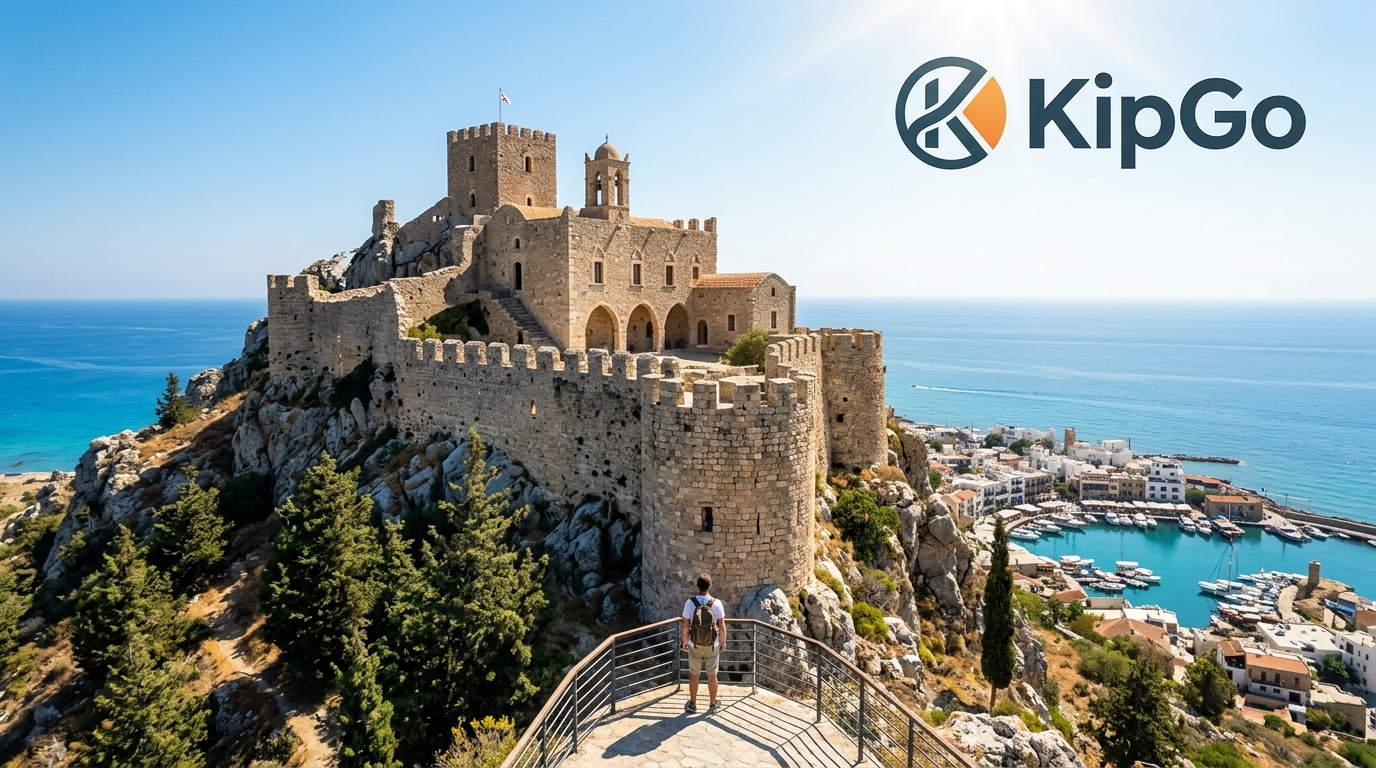
History of Northern Cyprus: Castles, Ancient Ruins & Travel Guide
Northern Cyprus is a destination where thousands of years of Mediterranean history can be experienced through ancient ruins, mountain castles, medieval monasteries, historic harbors, Venetian fortifications, and Ottoman architecture.
Located in the eastern Mediterranean, Cyprus has been influenced by many civilizations throughout its long history. Greeks, Romans, Byzantines, Lusignans, Venetians, Ottomans, and later the British all left their mark on the island.
Today, exploring the History of Northern Cyprus offers travelers an opportunity to discover this remarkable heritage while enjoying mountain landscapes, Mediterranean coastlines, historic towns, and traditional villages.
This Northern Cyprus travel guide takes you through some of the most important historical periods and places to visit, from ancient Salamis and Roman ruins to Saint Hilarion Castle, Bellapais Abbey, Famagusta, Kyrenia, and historic Nicosia.
Ancient Cyprus: The Beginning of a Long History
The history of Cyprus goes back thousands of years. Archaeological discoveries across the island provide evidence of prehistoric settlements and early Mediterranean civilizations.
Cyprus became particularly important because of its natural resources, especially copper. The island's copper deposits contributed to its importance in Mediterranean trade during antiquity.
Over time, different cultures arrived on the island, including Mycenaean Greeks and Phoenicians. Greek culture eventually became one of the most important influences on Cyprus, shaping its language, religion, architecture, and traditions.
The island later developed several independent city-kingdoms, many of which became important centers of trade and political power.
Ancient Salamis: One of Cyprus's Greatest Archaeological Sites
Near modern-day Famagusta lies ancient Salamis, one of the most impressive archaeological sites in Northern Cyprus.
Salamis developed into an important city and remained significant through several historical periods, particularly during the Hellenistic and Roman eras.
Visitors can explore the remains of:
Roman baths
An ancient theater
Gymnasium structures
Marble columns
Statues and archaeological remains
Ancient streets and public buildings
Early Christian structures
Walking through Salamis provides a remarkable sense of how large and sophisticated an ancient Mediterranean city could be.
For travelers interested in archaeology and ancient history, Salamis is an essential stop on a Northern Cyprus itinerary.

Cyprus Under Roman Rule
Cyprus became part of the Roman world in the 1st century BC.
During the Roman period, cities across the island benefited from improved infrastructure and extensive architectural development.
Roads, public buildings, baths, theaters, and other urban facilities were constructed or expanded.
The remains of Roman architecture can still be seen at archaeological sites throughout Cyprus. Ancient mosaics, columns, theaters, and public spaces provide evidence of the importance of Roman culture on the island.
Salamis is particularly valuable for understanding this period of Cyprus's history.
Byzantine Cyprus and the Mountain Castles
After the Roman Empire was divided in the 4th century AD, Cyprus became part of the Byzantine Empire.
The island's strategic position in the eastern Mediterranean made defense increasingly important. Fortifications were developed or strengthened in the Kyrenia Mountains, creating some of the most spectacular landmarks in Northern Cyprus.
Saint Hilarion Castle
Saint Hilarion Castle is one of the most famous historical attractions in Northern Cyprus.
Built high in the Kyrenia Mountains, the fortress consists of towers, defensive walls, courtyards, chambers, and steep mountain pathways.
Its dramatic location provides spectacular views across the northern coastline.
The combination of medieval architecture and rugged mountain scenery makes Saint Hilarion particularly popular among travelers, photographers, and history enthusiasts.
Buffavento Castle
Buffavento Castle is another impressive fortress located high in the Kyrenia mountain range.
Its name is commonly associated with the meaning "Defier of the Winds," reflecting its exposed position.
The journey to the castle involves a challenging climb, but visitors are rewarded with remarkable mountain and coastal views.
Kantara Castle
Kantara Castle stands toward the eastern end of the Kyrenia mountain range.
Its location allowed it to control important routes toward the Karpaz Peninsula.
Today, the castle is known for its panoramic views and dramatic mountain setting.
The Lusignan Period and Gothic Architecture
One of the most fascinating chapters in the history of Cyprus began during the medieval period.
In 1191, Richard the Lionheart captured Cyprus during the Third Crusade. The island subsequently came under the rule of the Lusignan dynasty.
The Lusignan period lasted for almost three centuries and left an important architectural legacy.
Gothic churches, monasteries, castles, and royal buildings were constructed across the island.
Bellapais Abbey
Located in the mountains near Kyrenia, Bellapais Abbey is one of the most beautiful medieval monuments in Northern Cyprus.
The abbey is famous for its Gothic arches, stone columns, courtyard, and spectacular mountain surroundings.
Today, Bellapais is one of the most photographed historical sites in the region.
Its location also makes it an excellent stop when exploring the villages and mountain roads around Kyrenia.
Famagusta's Gothic Heritage
Famagusta contains some of the most impressive examples of medieval Gothic architecture in Cyprus.
The former Cathedral of Saint Nicholas, now known as Lala Mustafa Pasha Mosque, is a particularly striking example.
The building combines Gothic architectural elements with later Ottoman modifications, reflecting the changing history of the city.
Venetian Cyprus and the Great Fortifications
In 1489, Cyprus came under Venetian control.
The Venetians recognized the island's strategic importance and strengthened several major cities, particularly Nicosia and Famagusta.
The defensive architecture created during this period remains one of the most recognizable features of historic Northern Cyprus.
Venetian Walls of Nicosia
The historic Venetian walls surrounding Nicosia are among the most impressive Renaissance fortifications in the eastern Mediterranean.
The circular defensive system includes massive walls, gates, and bastions designed to protect the city against military attacks and artillery.
The walls remain an important part of the historic identity of Nicosia.
Famagusta Fortifications
Famagusta became one of the most heavily fortified cities in the Mediterranean.
Its massive walls, gates, towers, and harbor defenses demonstrate the city's historical importance as both a commercial and military center.
Othello Castle
Located within the historic walls of Famagusta, Othello Castle is one of the city's best-known landmarks.
The fortress is traditionally associated with Shakespeare's Othello, although the historical fortress and Shakespeare's fictional story are separate aspects of the site's history.
Kyrenia Castle and the Historic Harbor
Kyrenia Castle stands beside the city's famous old harbor.
The fortress has been modified and expanded during different periods of Cypriot history, including Byzantine, Lusignan, Venetian, and Ottoman times.
Today, visitors can explore the castle while enjoying views across the historic harbor.
The surrounding old town, narrow streets, restaurants, and waterfront make Kyrenia one of the most popular destinations for travelers exploring Northern Cyprus.
The Ottoman Era
In 1571, Cyprus became part of the Ottoman Empire.
The Ottoman period introduced new architectural and cultural influences while also transforming many existing buildings.
This created a distinctive architectural mixture that can still be seen in cities such as Nicosia and Famagusta.
Lala Mustafa Pasha Mosque
The former Cathedral of Saint Nicholas in Famagusta was converted into a mosque during the Ottoman period.
Today, its Gothic façade and Islamic architectural additions provide a fascinating example of how buildings were adapted to changing historical circumstances.
Selimiye Mosque
In the historic center of Nicosia, Selimiye Mosque was originally constructed as the Cathedral of Saint Sophia.
Its Gothic structure and later Ottoman modifications demonstrate the architectural changes that occurred during the transition between different periods of Cypriot history.
Büyük Han
Büyük Han, or the Great Inn, is one of the most recognizable Ottoman buildings in historic Nicosia.
Built in the 16th century, the caravanserai provided accommodation for merchants and travelers.
Today, the restored courtyard contains cafés, restaurants, craft shops, and galleries, making it a popular place for visitors to experience the historic atmosphere of Nicosia.
The Best Historical Places to Visit in Northern Cyprus
If history and culture are important parts of your trip, consider adding these destinations to your itinerary:
Ancient Salamis
A major archaeological site showcasing ancient Greek, Roman, and early Christian heritage.
Saint Hilarion Castle
A dramatic mountain fortress with spectacular views over the northern coast.
Bellapais Abbey
A beautiful example of medieval Gothic architecture near Kyrenia.
Kyrenia Castle
A historic fortress overlooking one of the island's most famous harbors.
Famagusta Old Town
A fascinating combination of medieval, Venetian, and Ottoman heritage.
Othello Castle
A historic fortress located within the walls of Famagusta.
Venetian Walls of Nicosia
A remarkable example of Renaissance military architecture.
Büyük Han
A historic Ottoman caravanserai in the heart of old Nicosia.
Kantara Castle
A mountain fortress overlooking the eastern part of the island.
Buffavento Castle
A spectacular high-altitude fortress surrounded by the Kyrenia Mountains.
How to Explore the History of Northern Cyprus
Northern Cyprus is compact enough to explore by car, but many of its most interesting historical attractions are located in different parts of the island.
Kyrenia is an excellent base for visiting Bellapais, Saint Hilarion, and the northern mountain region.
Famagusta provides access to ancient Salamis and some of the island's most important medieval and Venetian landmarks.
Nicosia offers another completely different historical experience, with Venetian walls, Ottoman buildings, traditional markets, and historic religious architecture.
Having your own transportation makes it easier to combine several attractions in one trip.
Explore Northern Cyprus with KipGo
Planning a historical trip becomes easier when transportation and travel services are organized in one place.
With KipGo, travelers can explore travel services designed for discovering Northern Cyprus.
Car Rental in Northern Cyprus
A rental car gives travelers the freedom to explore historical sites, mountain villages, beaches, and archaeological attractions at their own pace.
KipGo can help travelers discover car rental Northern Cyprus options and organize transportation around their itinerary.
Travel and Accommodation
KipGo is designed as a travel super app, bringing travel-related services together to make planning a Northern Cyprus trip more convenient.
Whether you are visiting for a weekend or planning a longer island adventure, having access to transportation, accommodation, and travel information can make the experience easier to organize.
Plan Your Historical Journey Through Northern Cyprus
The History of Northern Cyprus is a story shaped by thousands of years of civilization.
Ancient cities, Roman ruins, Byzantine castles, Lusignan monasteries, Venetian fortifications, and Ottoman architecture can all be found within a relatively small area.
From walking among the ruins of ancient Salamis to climbing Saint Hilarion Castle, exploring Bellapais Abbey, discovering the streets of Famagusta, or enjoying the historic atmosphere of Kyrenia and Nicosia, Northern Cyprus offers countless opportunities to connect with the past.
If you are planning a trip focused on history, architecture, culture, and Mediterranean landscapes, Northern Cyprus offers a unique journey through the civilizations that shaped this remarkable island.
Plan your Northern Cyprus adventure with KipGo and discover more of the island's history, culture, and hidden places.
Visit www.kipgoo.com to start planning your journey.